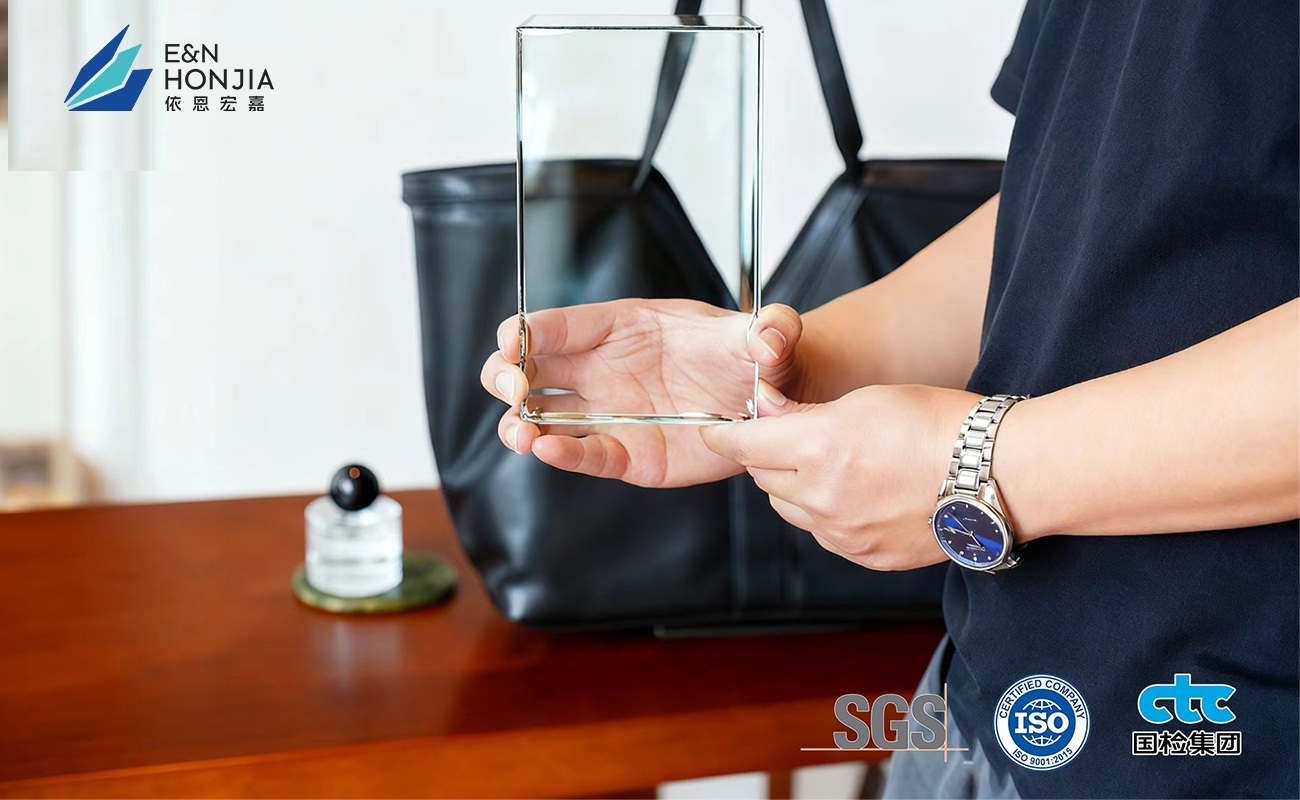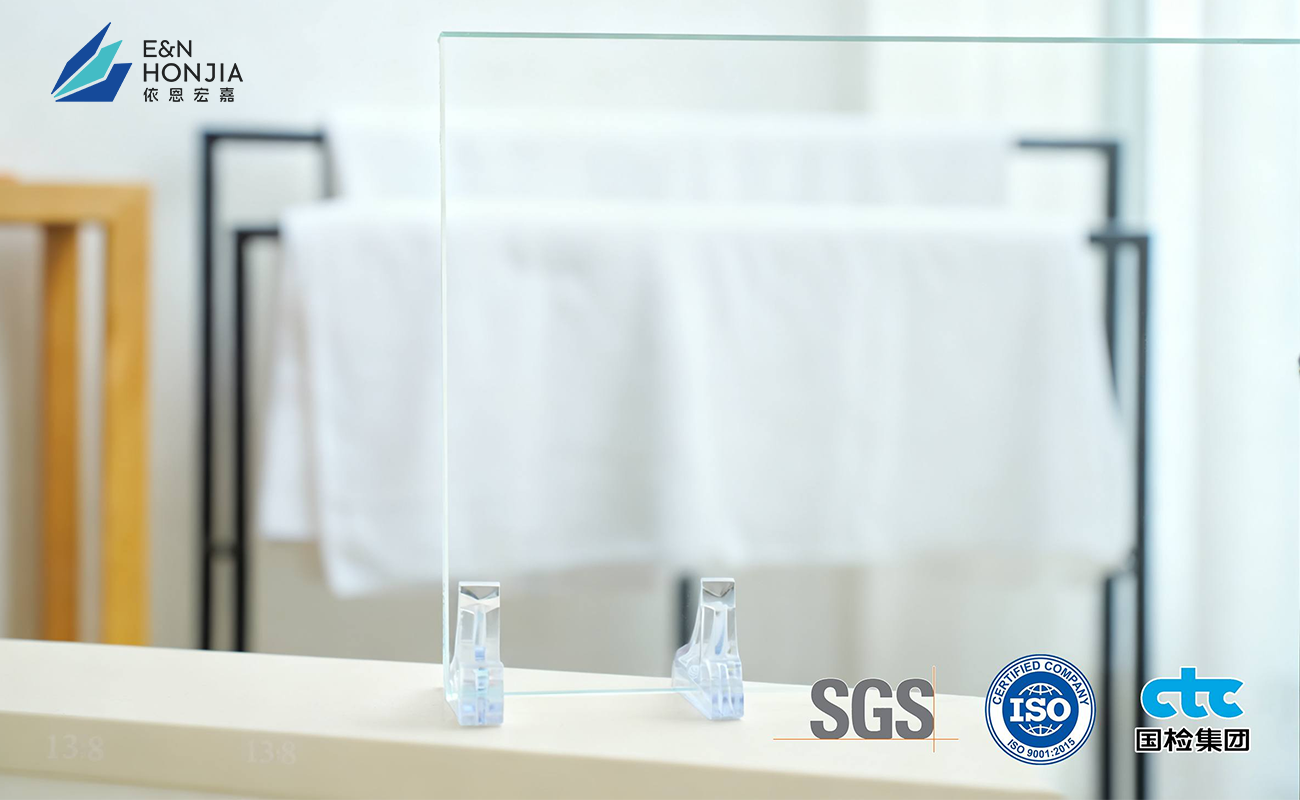
|
Item |
Unit |
Value / Result |
Remarks |
|
Thickness |
mm |
0.38 |
Standard option |
|
Width |
mm |
2000 / 2200 / 2400 |
Roll width options |
|
Length |
m |
50 |
Roll packaging |
|
Appearance |
— |
Uniform deep black, opaque |
Full light blocking |
|
Adhesion with Glass |
N/cm |
> 100 |
Strong bonding, no delamination |
|
Tensile Strength |
MPa |
> 17 |
High mechanical strength |
|
Elongation at Break |
% |
≥ 800 |
Excellent flexibility |
|
Weather Resistance |
— |
Pass |
No bubbles, no peeling after boiling water (100 °C, 4h) and high humidity/heat (85 °C) tests |
|
UV Aging Test |
ΔYI |
< 1 |
Excellent color stability, minimal yellowing |
|
Edge Stability |
— |
Bare-edge installation possible |
Maintains performance at glass edges |
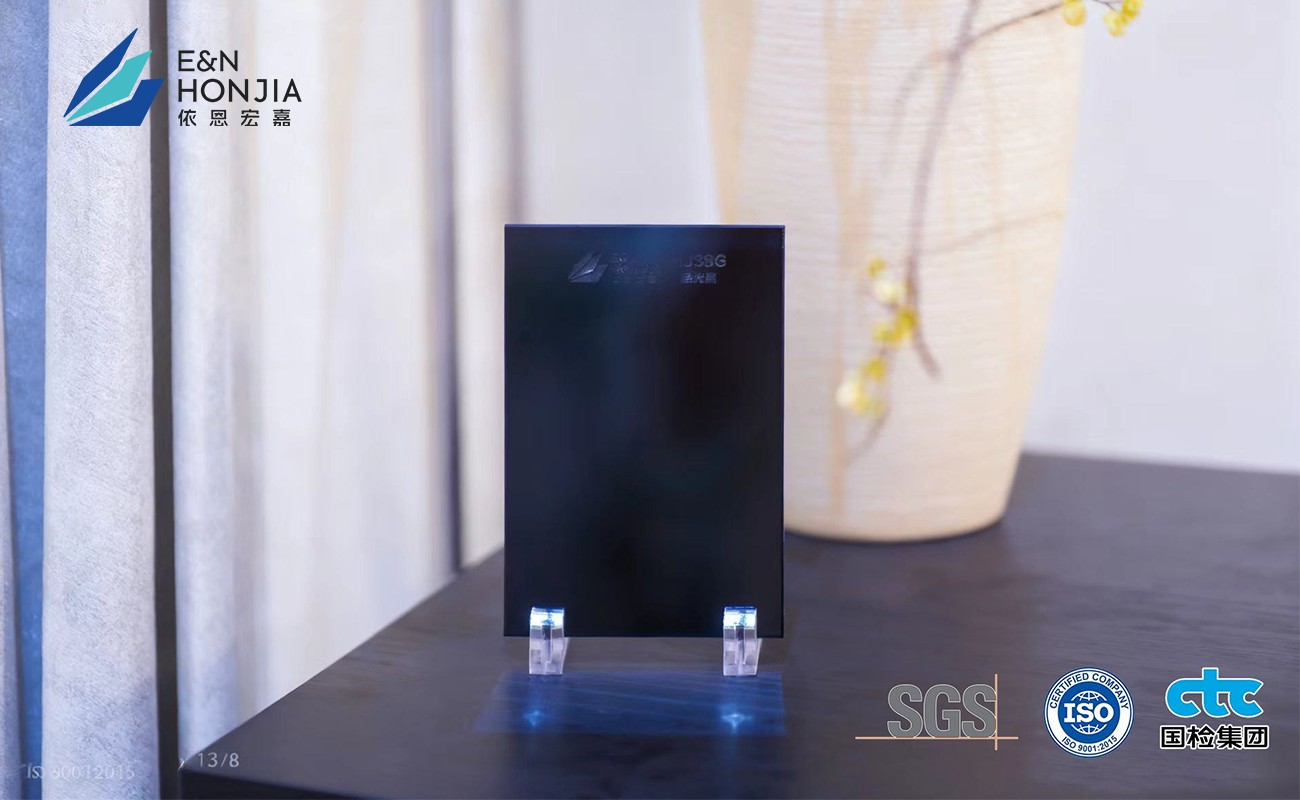
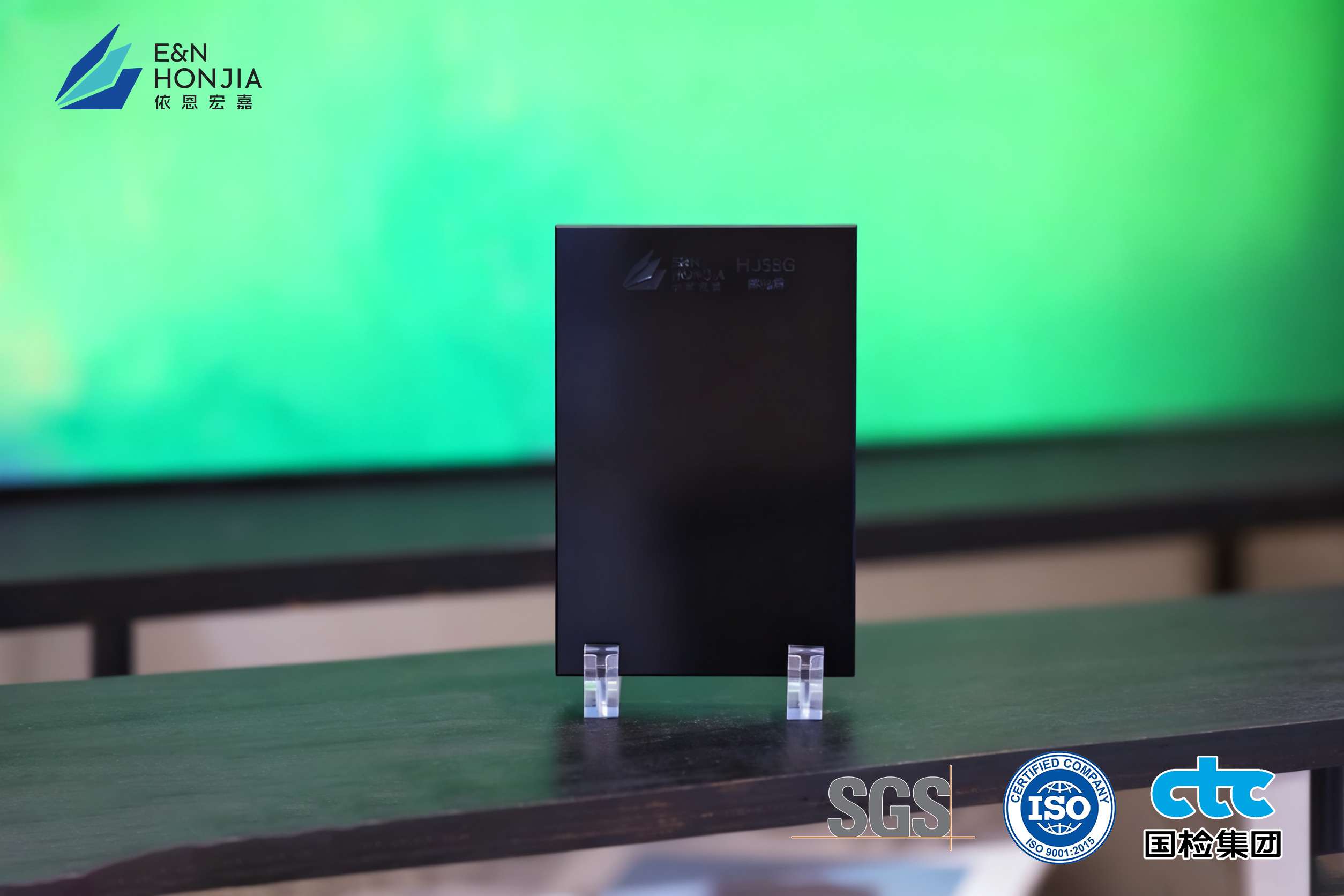
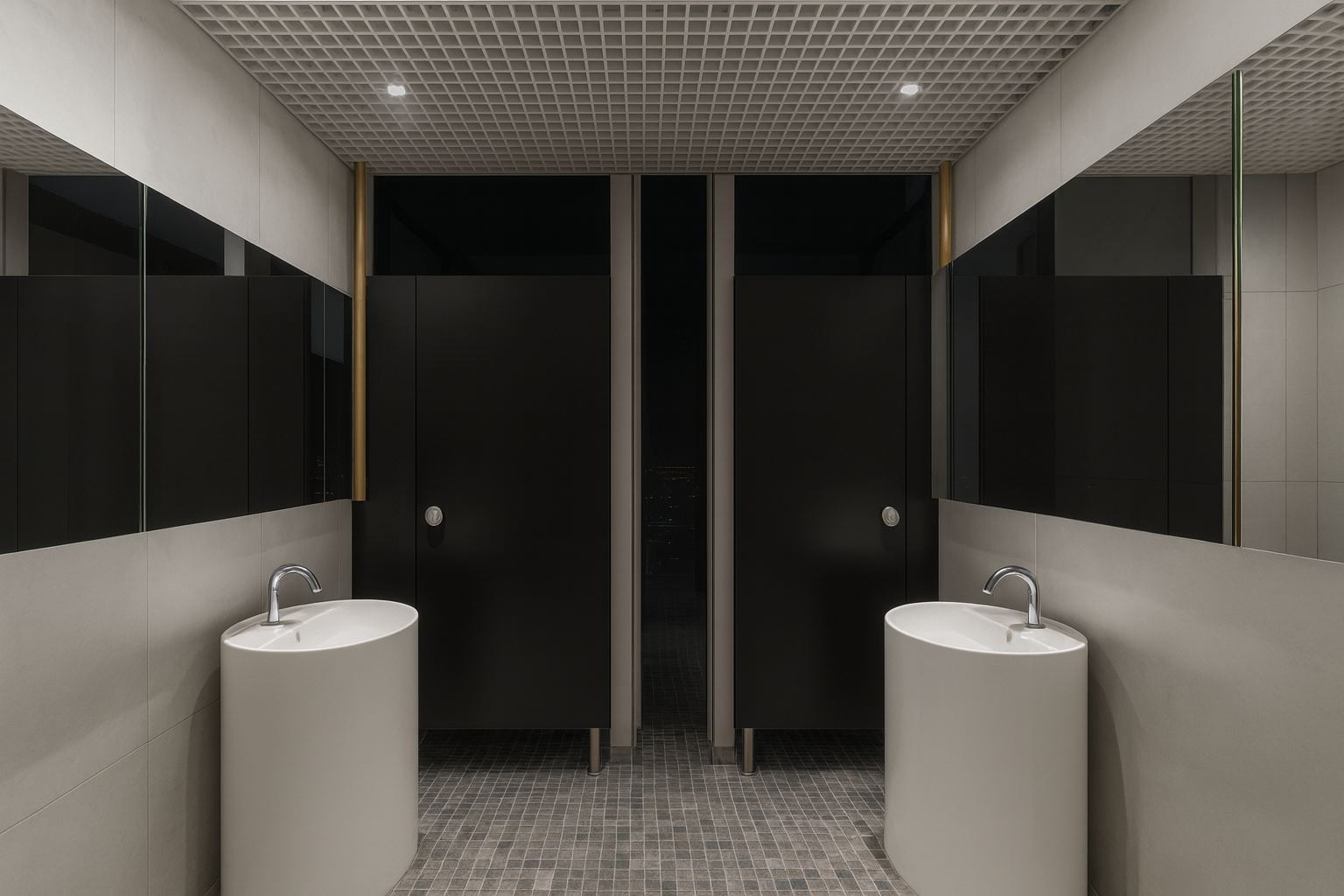
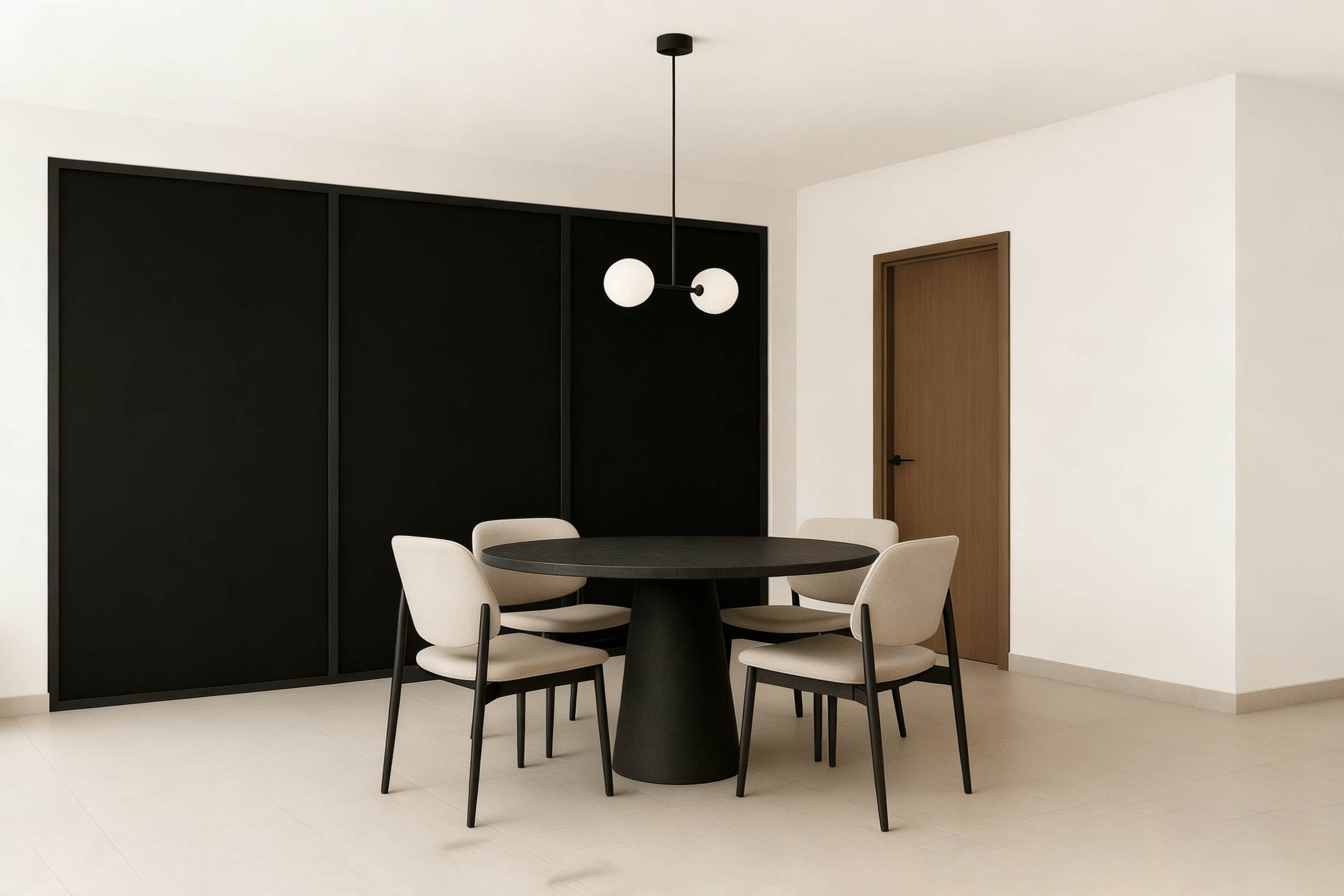
Black Opaque EVA Interlayer
HJ-G is a black opaque EVA interlayer developed for laminated glass where complete visual privacy, a uniform dark appearance and strong decorative contrast are required.
Product Features :
- Deep Black Opaque Finish
- Excellent Adhesion & Safety
- Durable Performance
- UV & Weather Resistance
- High Mechanical Strength
- Design Flexibility
- Wide Applications
HJ-G Black Opaque EVA Interlayer for Decorative Laminated Glass
HJ-G is a black opaque EVA interlayer developed for laminated glass where complete visual privacy, a uniform dark appearance and strong decorative contrast are required.
Unlike clear, frosted or translucent white EVA interlayers, HJ-G is designed to create a solid black visual effect inside the laminated-glass construction. It is suitable for partitions, decorative panels, furniture glass, signage and commercial interiors where seeing through the glass is not desired.
The black layer is enclosed between two glass sheets after lamination, allowing the decorative colour to become part of the laminated-glass structure rather than an exposed surface-applied film.
Key Highlights
-
Uniform opaque black appearance
- Strong visual privacy
- Decorative colour enclosed inside laminated glass
- Suitable for black architectural and interior glass
- Standard thickness: 0.38 mm
- Width options: 2000 / 2200 / 2400 mm
- 50 m standard roll length
- Suitable for customized decorative glass projects
What Is HJ-G Black Opaque EVA Interlayer?
HJ-G is part of E&N HONJIA's decorative black-and-white EVA interlayer series.
During laminated-glass production, HJ-G is placed between two glass sheets and processed using vacuum and controlled heating.
Typical construction:
Glass / HJ-G Black Opaque EVA / Glass
After lamination, the interlayer bonds the glass layers together while producing a deep, uniform black appearance.
HJ-G is different from clear or frosted EVA because its main design function is not to diffuse the view — it is intended to block visibility through the panel and create an opaque decorative surface.
This makes it useful where designers want the appearance of black glass while retaining a laminated-glass construction.
The final appearance may still be influenced by:
- Glass type
- Glass colour
- Glass thickness
- EVA layer configuration
- Edge treatment
- Reflections from surrounding light
- Installation background
For colour-sensitive or large projects, a representative laminated sample should be reviewed before mass production.
Typical Laminated Glass Structure with HJ-G
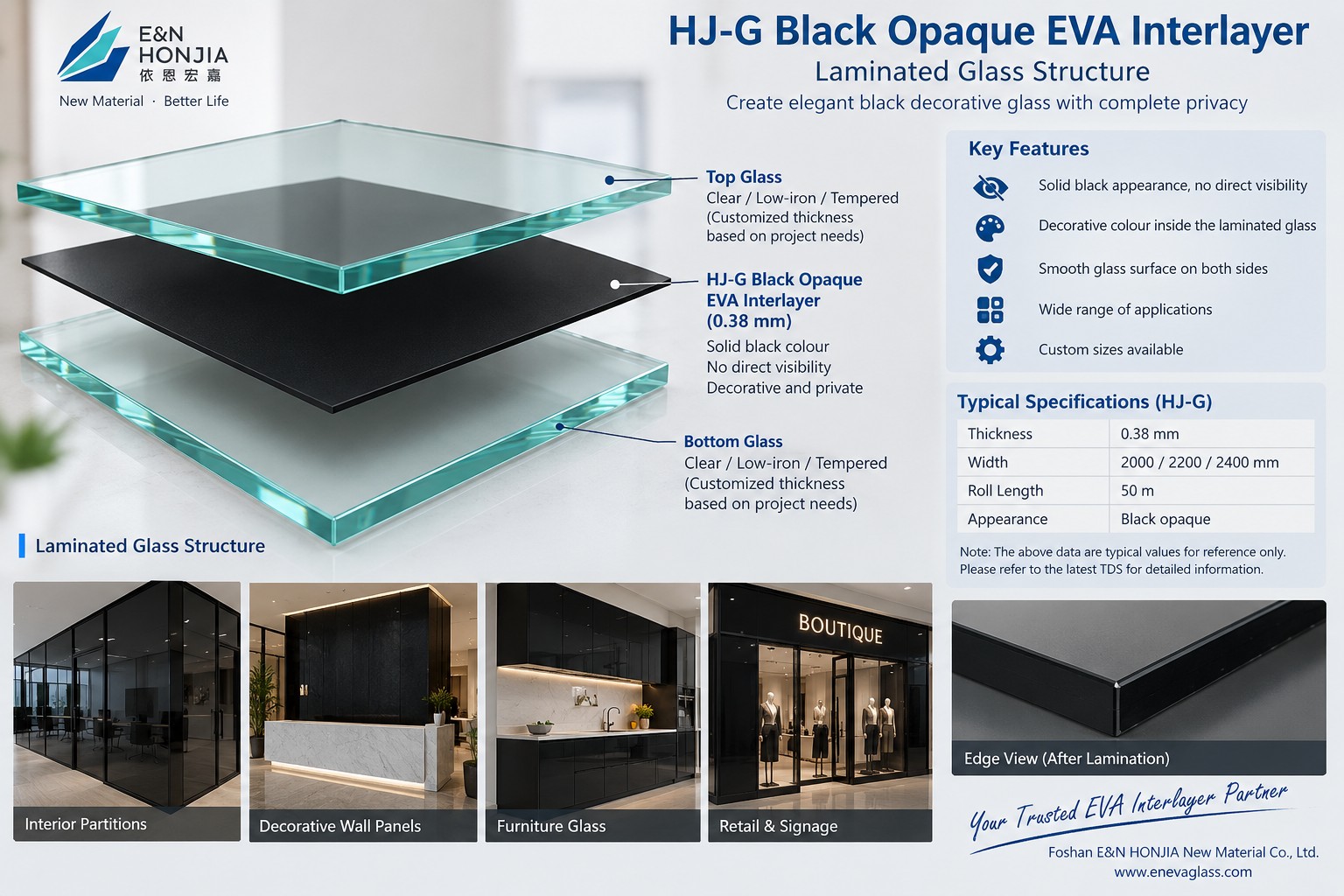
Top Glass Layer
The upper glass sheet forms one of the finished surfaces of the laminated panel.
Clear, low-iron, tempered or other suitable glass may be selected according to the required finished appearance and glass construction.
HJ-G Black Opaque EVA Interlayer
HJ-G is positioned between the glass sheets.
During lamination, it bonds to the glass and creates the black opaque decorative layer.
Because the colour is inside the laminated construction, it is not simply a black adhesive film applied to the exposed outer face of finished glass.
Bottom Glass Layer
The second glass sheet completes the laminated construction and encloses the black EVA interlayer.
Why this structure is useful
This structure allows glass processors to combine:
- Laminated-glass construction
- Black decorative appearance
- Visual privacy
- Smooth glass surfaces on both sides
HJ-G Technical Specifications
The current HJ-G page lists the following product data.
| Parameter | Unit | Current Value / Result |
|---|---|---|
| Model | — | HJ-G |
| Product Type | — | Black Opaque EVA Interlayer |
| Thickness | mm | 0.38 |
| Width | mm | 2000 / 2200 / 2400 |
| Roll Length | m | 50 |
| Appearance | — | Uniform deep black, opaque |
| Adhesion with Glass | N/cm | >100 |
| Tensile Strength | MPa | >17 |
| Elongation at Break | % | ≥800 |
| Weather Resistance | — | Current page: Pass |
| UV Aging | ΔYI | <1 |
| Edge Stability | — | Current page states bare-edge installation possible |
Internal publishing note
The mechanical, aging and bare-edge values above are currently published on the existing HJ-G page. Before the revised version goes live, I recommend checking them once against the latest HJ-G TDS / internal QC record, particularly the bare-edge and exterior-use claims.
The Visual Character of HJ-G Black Opaque EVA
Deep Opaque Black Appearance
HJ-G is designed to produce a solid black visual surface in laminated glass.
Unlike smoked or tinted glass, the purpose is not simply to darken the view.
The HJ-G interlayer creates an opaque black layer so that objects behind the finished panel are not intended to remain visible.
Strong Visual Privacy
HJ-G is suitable for areas where transparency is unwanted.
This can be useful for:
- Privacy partitions
- Concealed areas
- Decorative wall surfaces
- Furniture panels
- Commercial interiors
- Signage backgrounds
Smooth Glass Surface
Because the black layer is located inside the laminated structure, both exposed faces can remain glass surfaces.
This can be useful where a designer wants a black visual effect without putting a decorative film directly on the external face.
Strong Contrast in Interior Design
Black laminated glass can create strong visual contrast with materials such as:
- Light stone
- White walls
- Natural timber
- Stainless steel
- Brass
- Aluminium
- Concrete
- Warm architectural lighting
This makes HJ-G particularly useful for modern commercial and hospitality interiors.
Applications of HJ-G Black Opaque Laminated Glass
1. Interior Partitions
HJ-G can be used where a glass partition is required but visibility through the panel is not.
Typical applications include:
- Private offices
- Back-office areas
- Meeting-room sections
- Residential partitions
- Service-area screens
The opaque black appearance creates separation while retaining the finish and detailing associated with glass.
2. Decorative Wall Panels
HJ-G laminated glass can be used as a decorative wall-facing material.
The deep black surface can work with:
- Reception walls
- Elevator lobbies
- Hotel corridors
- Feature walls
- Commercial entrance areas
The reflective glass surface and opaque black layer can create a different appearance from painted walls or ordinary solid panels.
3. Furniture and Cabinet Glass
Black opaque laminated glass can also be considered for:
- Cabinet doors
- Table panels
- Shelving elements
- Display furniture
- Kitchen or interior decorative panels
Actual glass thickness and finished construction should be selected according to the furniture design.
4. Retail and Display Environments
HJ-G can provide a dark background that helps merchandise, lighting or graphics stand out.
Possible applications include:
- Luxury retail displays
- Jewellery stores
- Cosmetic counters
- Showrooms
- Exhibition displays
- Brand presentation areas
5. Signage and Graphic Glass
HJ-G can be used as a black base layer for decorative glass signage or graphic panels.
It can provide a uniform dark background where strong visual contrast is required.
Compatibility and processing should be tested when the glass construction includes printing, inserts or other decorative materials.
6. Hotels, Restaurants and Hospitality Interiors
Black glass works particularly well in hospitality environments where designers want a more dramatic visual effect.
Typical locations include:
- Bars
- Restaurant screens
- Hotel lobbies
- Reception desks
- VIP areas
- Decorative columns
- Lift surrounds
7. Functional Concealment
Opaque glass can be useful where the purpose is to hide what is behind a panel.
Examples may include:
- Service zones
- Structural backgrounds
- Equipment areas
- Cabinet interiors
- Decorative backing panels
HJ-G should still be selected according to the complete glass construction and project requirements.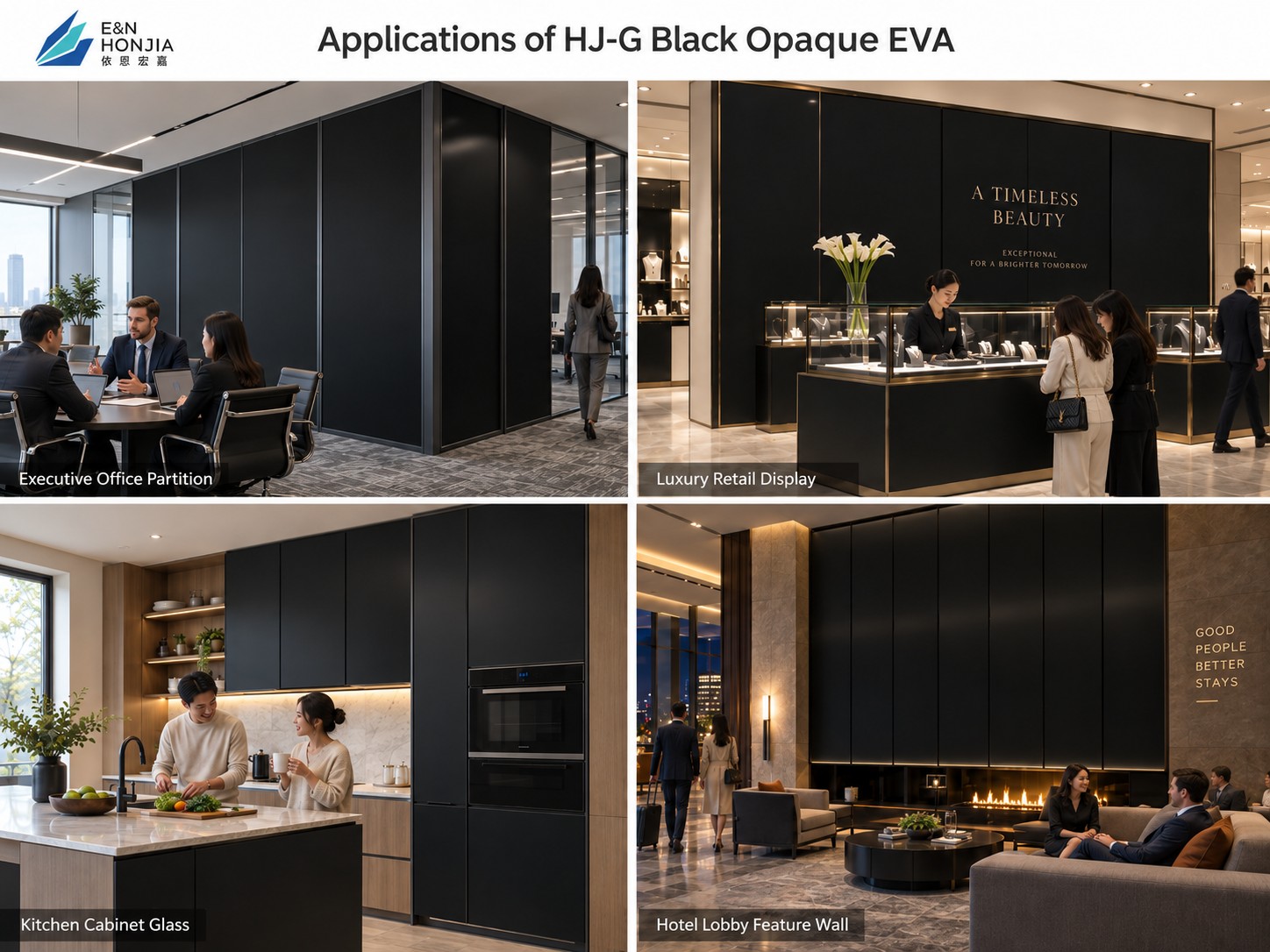
HJ-G vs Other Decorative EVA Interlayers
| Model | Main Appearance | Visibility Through Glass | Typical Selection |
|---|---|---|---|
| HJ-Y2 | Light jade frosted white | Partially visible / diffused | Light privacy |
| HJ-Y | Jade white | Strongly diffused | White privacy glass |
| HJ-D2 | Frosted white | Strong diffusion | Frosted decorative effect |
| HJ-S | Deep jade frosted | Very strong diffusion | Strong frosted privacy |
| HJ-C2 | Super white opaque | Opaque / very strongly blocked | Solid white appearance |
| HJ-C | Deep white | Strong white decorative effect | Deeper white design |
| HJ-G | Black opaque | No intended direct visibility | Solid black decorative glass |
E&N's current product catalogue separately lists HJ-G as the Black Opaque EVA Interlayer, distinct from the jade, frosted and white-opaque grades.
Choose HJ-Y / HJ-Y2 when:
You want white or frosted privacy while still maintaining some transmitted light.
Choose HJ-S when:
You need a stronger frosted-white privacy effect.
Choose HJ-C2 when:
You want a strongly opaque white appearance.
Choose HJ-G when:
You want a black opaque decorative effect and do not want the background to remain visible through the panel.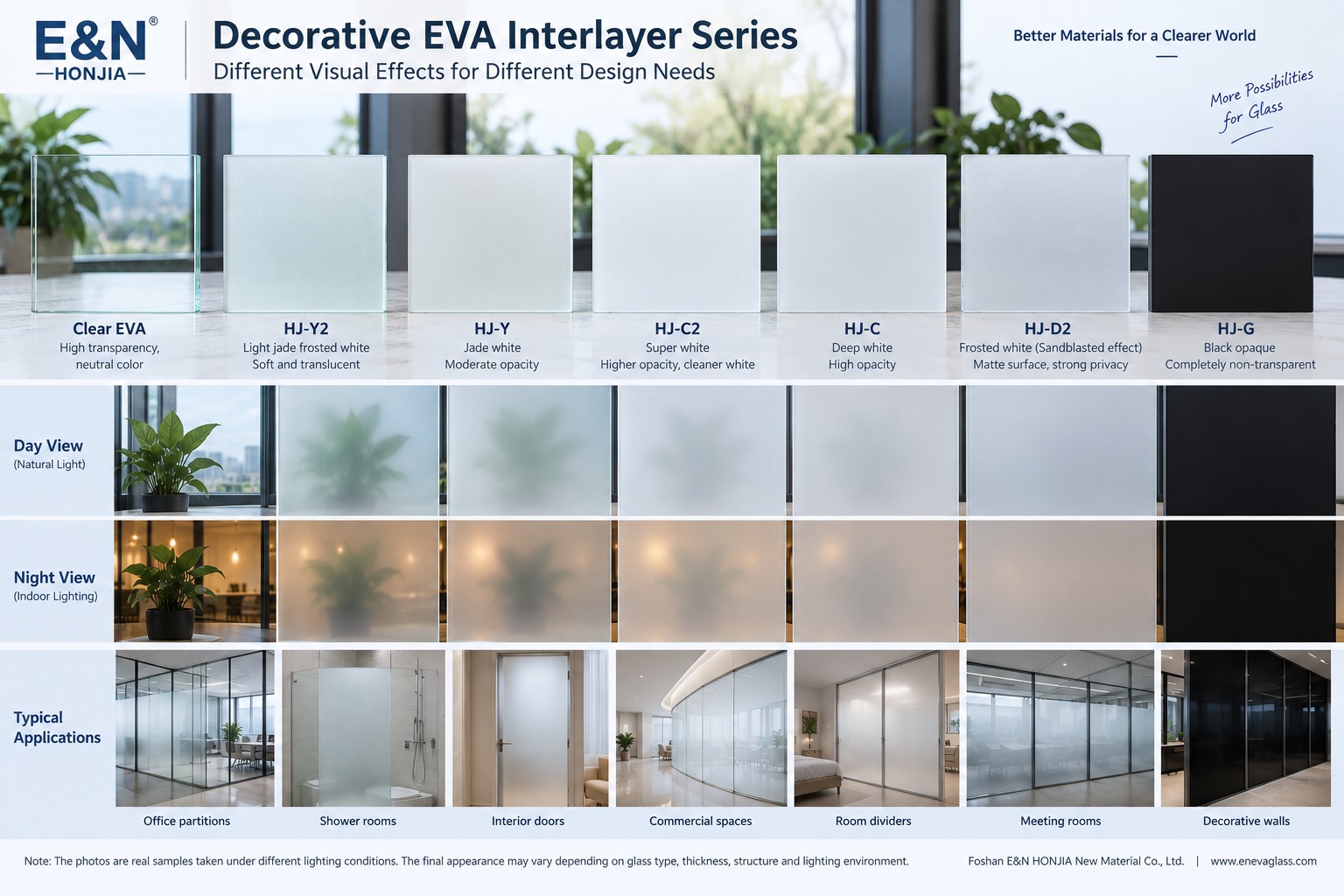
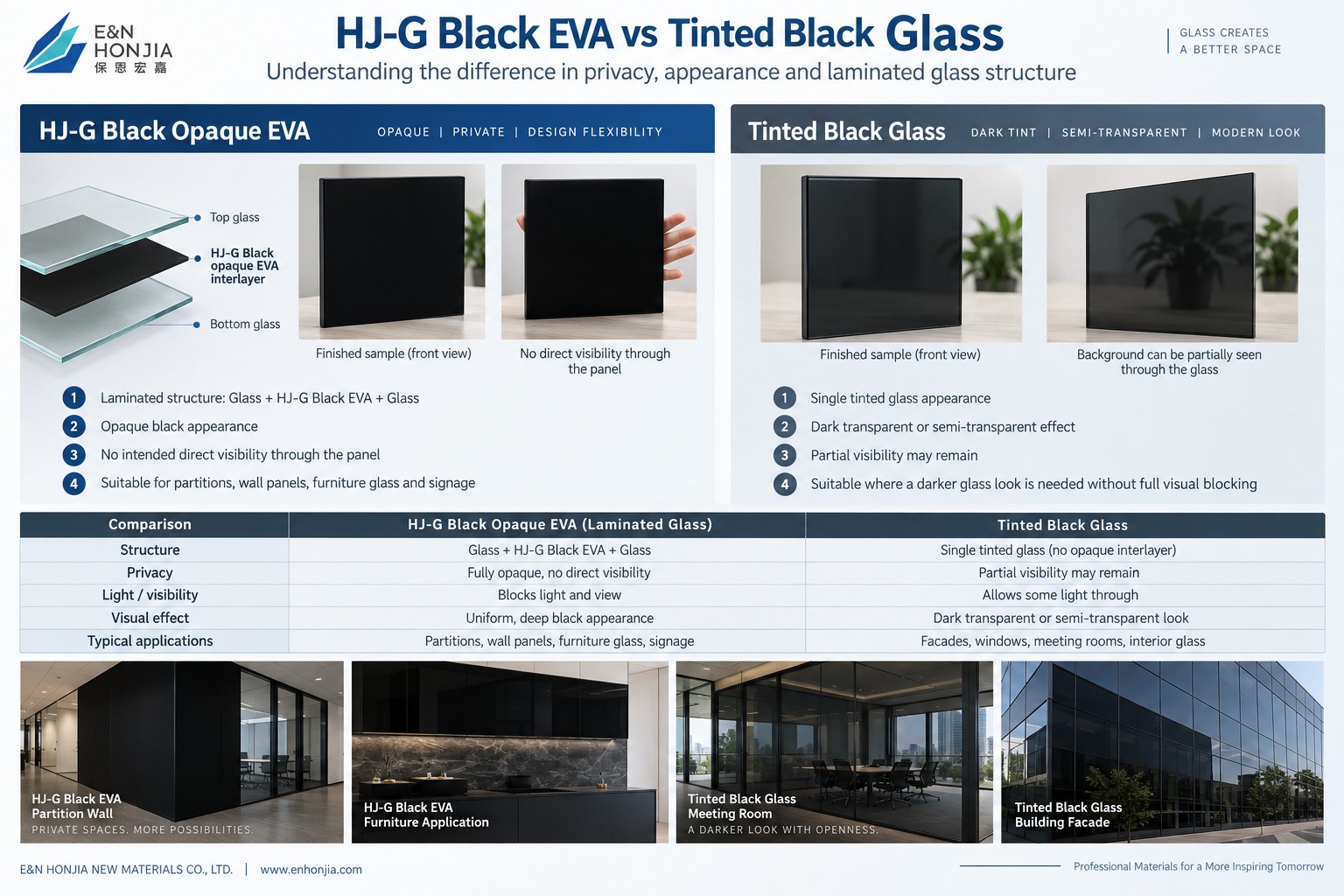
HJ-G Black EVA vs Tinted Black Glass
HJ-G black opaque laminated glass should not be confused with ordinary dark tinted glass.
Dark Tinted Glass
Dark tinted glass reduces light transmission but may still allow objects or light sources behind the panel to remain visible.
HJ-G Black Opaque Laminated Glass
The HJ-G EVA layer is designed to create an opaque black visual layer inside the laminated glass.
Which should I choose?
Choose tinted glass when controlled transparency or solar appearance is required.
Choose HJ-G when the main requirement is:
- Privacy
- Concealment
- Black decorative appearance
- Minimal background visibility
Available Specifications
Current standard HJ-G specifications include:
Thickness
0.38 mm
Width
2000 mm
2200 mm
2400 mm
Roll Length
50 m
For a project inquiry, please provide:
- Required width
- Quantity
- Glass size
- Glass thickness
- Glass build-up
- Intended application
- Indoor or outdoor environment
- Required finished appearance
Processing HJ-G EVA Interlayer
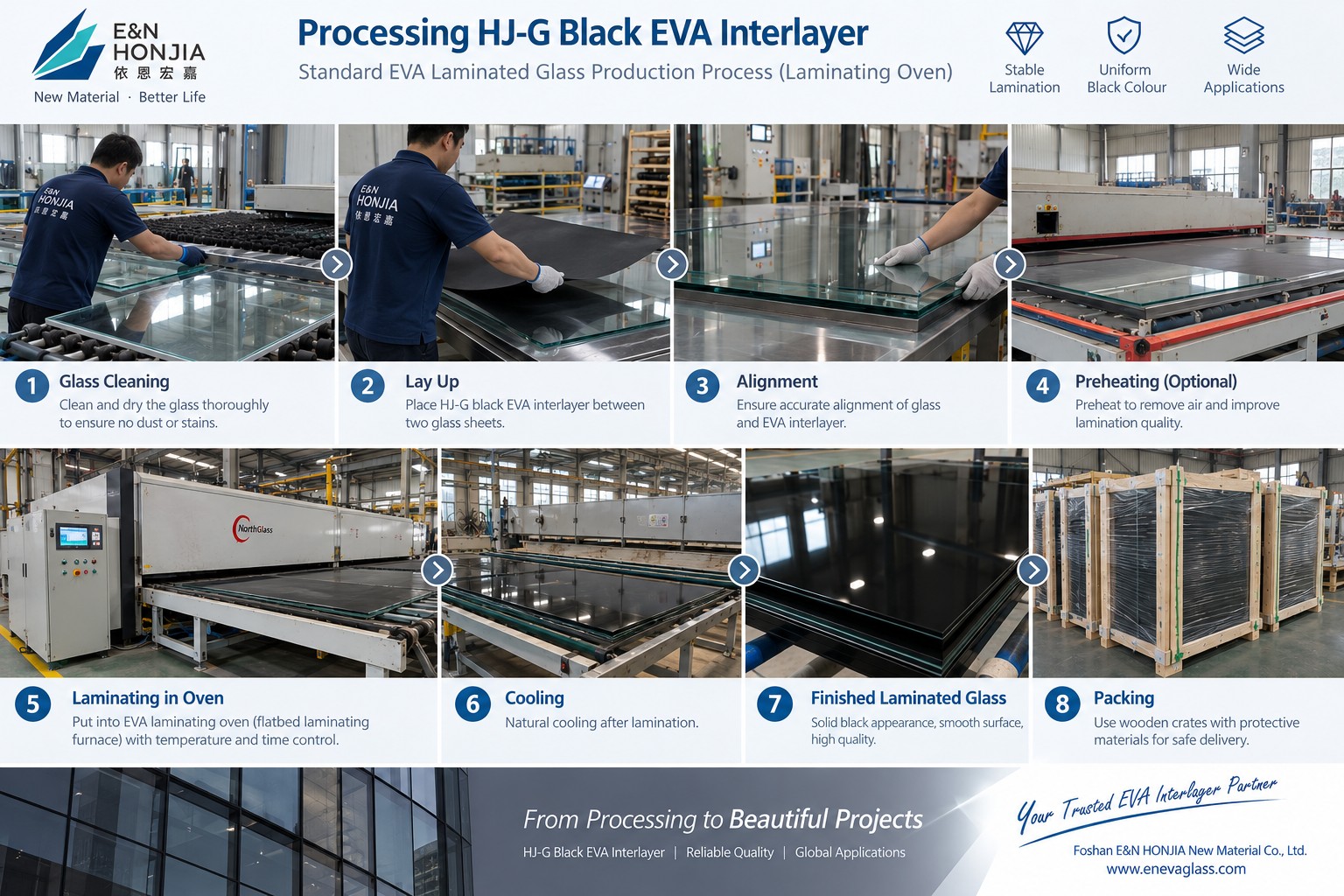
1. Film Preparation
Inspect the HJ-G EVA film on the production line.
Check for:
- Colour consistency
- Surface defects
- Contamination
- Film condition
As with your other EVA products, the film surface should remain clean and should not be touched unnecessarily during production.
2. Thickness Check
Measure film thickness using the appropriate thickness gauge according to the QC specification.
3. Full Roll Width Check
Measure the full width of the EVA roll with a ruler or measuring tape.
Confirm the actual roll width matches the required specification.
4. Clean the Glass
Make sure the glass is clean and dry before assembly.
Remove:
- Dust
- Oil
- Fingerprints
- Moisture
- Surface contamination
Black decorative glass can make certain contamination or local defects easier to notice after lamination.
5. Cut and Assemble
Cut HJ-G according to the glass dimensions.
Position the EVA film evenly between the two glass sheets.
Maintain a clean working area during assembly.
6. Vacuum and De-air
Place the assembled glass into the EVA vacuum bag.
Remove trapped air completely and confirm that the vacuum system is properly sealed.
7. Heating and Lamination
Place the vacuumed glass into an EVA vacuum laminating furnace.
The actual processing cycle depends on:
- Glass thickness
- Panel size
- EVA thickness
- Number of layers
- Vacuum performance
- Furnace characteristics
- Production conditions
A representative sample should be produced when introducing a new glass build-up.
8. Cooling
After lamination, allow the glass to cool under appropriate conditions before handling.
9. Final Inspection
Check the finished HJ-G laminated glass for:
- Uniform black colour
- Bubbles
- Edge condition
- Local colour variation
- Contamination
- Delamination
- Overall surface appearance
Quality Control for HJ-G Black Opaque EVA
HJ-G QC should focus not only on material dimensions, but also on black colour consistency.
Film Appearance Inspection
Visually inspect the moving film on the EVA production line.
Check:
- Uniform black colour
- Surface cleanliness
- Visible contamination
- Surface defects
To protect film cleanliness, operators should inspect without unnecessary direct hand contact with the film surface.
Thickness Check
Use the appropriate measuring equipment to confirm film thickness.
Roll Width Check
Measure the full EVA roll width and compare it with the production specification.
Laminated Sample Inspection
Inspect representative laminated-glass samples for:
- Bubbles
- Edge quality
- Bonding
- Contamination
- Colour uniformity
Black Tone and Opacity Check
Evaluate the finished laminate under representative lighting.
For HJ-G, important appearance criteria include:
- Black tone
- Uniformity
- Opacity
- Background blocking
- Surface appearance
Final QC and Traceability
Before shipment, verify:
- Model
- Thickness
- Width
- Quantity
- Batch number
- Packaging condition
Maintain production records for batch traceability.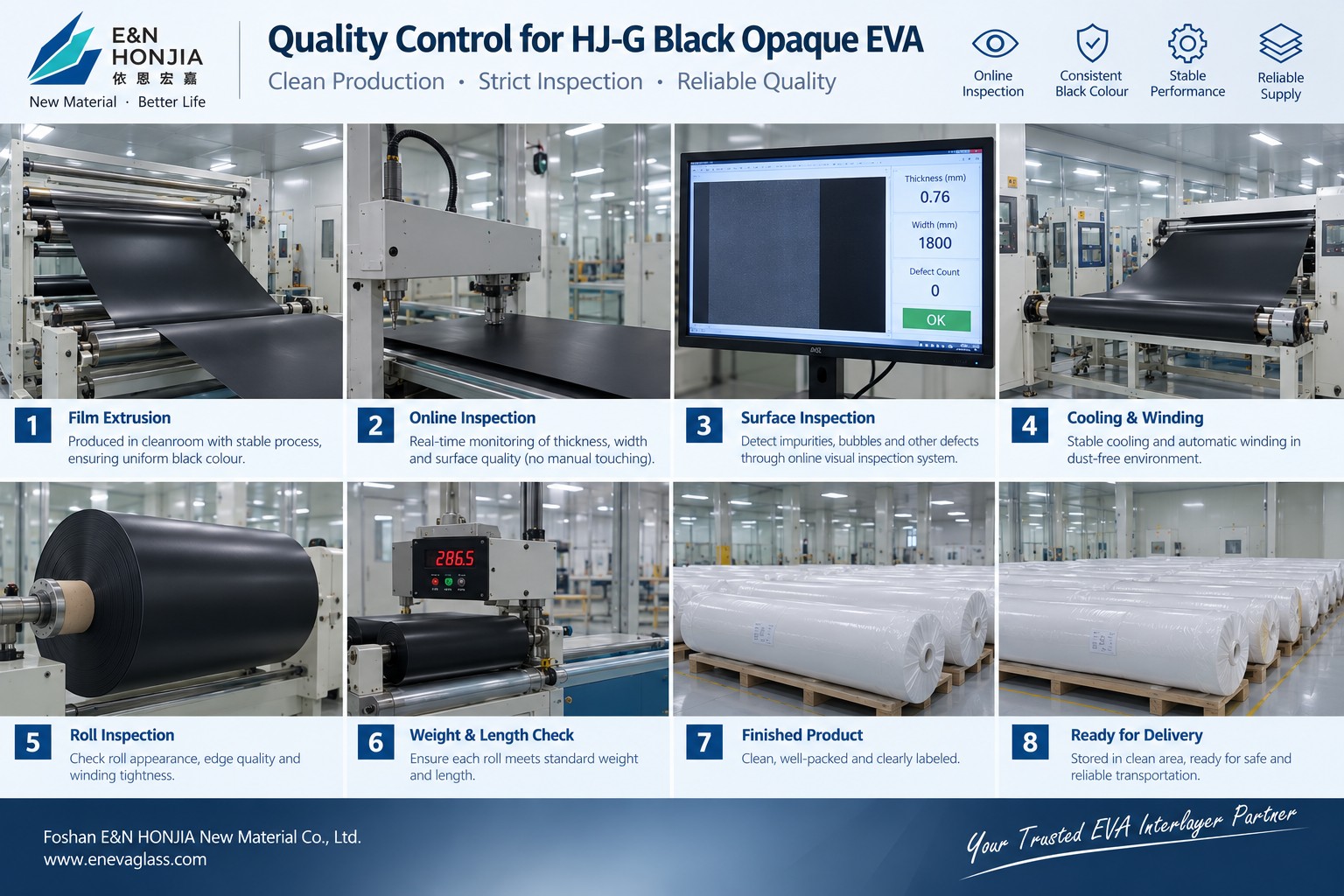
Why E&N HONJIA for Decorative EVA?
E&N HONJIA's decorative EVA range covers different visual requirements rather than offering only clear EVA.
Current product families include clear, jade-white, frosted, white opaque and black opaque grades.
This allows glass processors to select the material based on the required finished-glass effect:
transparent → translucent → frosted → white opaque → black opaque
For appearance-sensitive applications, sample lamination is recommended before mass production.
Frequently Asked Questions
1.Is HJ-G transparent?
No.
HJ-G is designed as a black opaque EVA interlayer rather than a transparent or translucent EVA.
Its purpose is to create a solid black visual effect in laminated glass.
2.Is HJ-G the same as dark tinted glass?
No.
Dark tinted glass may still allow light or objects behind the glass to remain visible.
HJ-G is designed to create an opaque black layer inside laminated glass.
3.What is the difference between HJ-G and HJ-C2?
HJ-G creates a black opaque appearance.
HJ-C2 is E&N's Super White Opaque EVA and is intended where a solid white appearance is required.
4.Can HJ-G be used for office partitions?
Yes.
It can be considered where complete visual separation and a black decorative appearance are required.
5.Can HJ-G be used for signage?
Yes.
Black laminated glass can provide a strong background for branding, lettering and decorative signage.
Compatibility should be tested if printing, inserts or other decorative materials are added.
6.Does HJ-G transmit light?
HJ-G is positioned as an opaque black EVA and the current page describes it as providing full light blocking. However, the page does not publish a numerical visible-light-transmittance value. For projects requiring a specific optical specification, confirm the requirement with E&N before ordering.
7.Can HJ-G be used outdoors?
The current HJ-G page lists weather-resistance testing and exterior decorative applications. However, outdoor suitability should still be evaluated according to the complete laminated-glass build-up, edge condition, installation system and expected environmental exposure.
8.Can the glass edges remain exposed?
The current HJ-G page states that bare-edge installation is possible. For a specific project, edge exposure and long-term installation conditions should still be confirmed against the current HJ-G technical documentation and finished-glass design.
9.What thickness is available?
The current standard specification published for HJ-G is 0.38 mm.
10.What widths are available?
Current standard widths are:
2000 / 2200 / 2400 mm.
11.Can I request a sample?
Yes.
For black decorative EVA, producing a laminated sample is useful for confirming:
- Black tone
- Opacity
- Glass reflection
- Edge appearance
- Overall visual effect
before mass production.
Need Help Choosing the Right Decorative EVA?
For decorative laminated glass, start with the appearance required in the finished panel.
Please send us:
- Required colour
- Required transparency or opacity
- Reference image
- Glass dimensions
- Glass build-up
- EVA specification
- Quantity
- Indoor or outdoor use
- Laminating equipment
E&N HONJIA can help compare suitable EVA grades and prepare samples for testing.
Request a Quote | Request a Sample | Contact E&N HONJIA